
When seconds matter, identification matters.
FIRAM puts a child's face, emergency information, and medication together in one clear, organized system.

THE PROBLEM
During an emergency, every second spent searching is a second lost.
When a child has a reaction, staff shouldn't have to read labels, search through bags, or rely on memory to find the right medication. In a busy classroom with multiple children and caregivers, that delay can matter.

THE PROBLEM WITH THE NUMBERS
Emergency medication in schools is more common, and more complicated, than most people realize.
The need for better identification and organization isn't hypothetical. The data makes it clear.
27%
of the 52 million school-aged children in the US have at least one chronic medical condition requiring medication during the school day.
Source: University of Iowa College of Nursing
1 in 5
schools has no designated school nurse, leaving medication administration to untrained or unlicensed staff who may not know the children in their care.
Source: University of Iowa College of Nursing
3x
higher rate of medication errors when unlicensed personnel administer medications in place of a school nurse.
Source: Institute for Safe Medication Practices
55.6%
of day care centers surveyed reported a missed medication dose had occurred, one of the two most common errors identified in the study.
Source: Journal of the American Pharmacists Association
THE SOLUTION
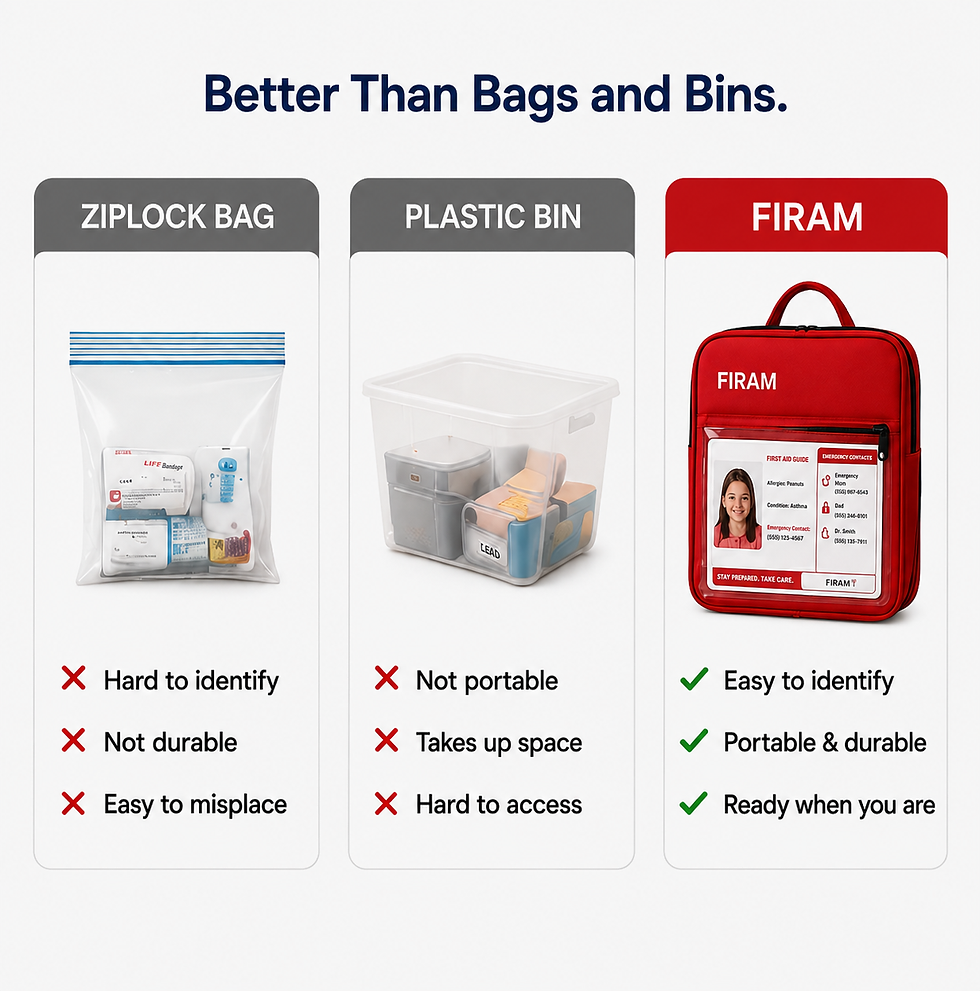
One bag. One face. One clear system.
FIRAM organizes every child's emergency medication behind a visible photo ID window. Staff see the child's face, name, and medication at a glance -- no searching, no guessing, no wasted time.
-
Child photo visible on front of bag
-
Dedicated compartments for photo ID and medication specifics
-
Name, age, classroom, and medication info
-
Consistent system across all children
-
Designed for substitute and unfamiliar staff
THE SOLUTION
One bag. One face. One clear system.
FIRAM organizes every child's emergency medication behind a visible photo ID window. Staff see the child's face, name, and medication at a glance -- no searching, no guessing, no wasted time.
-
Child photo visible on front of bag
-
Dedicated compartments for photo ID and medication specifics
-
Name, age, classroom, and medication info
-
Consistent system across all children
-
Designed for substitute and unfamiliar staff
WHO IT'S FOR
Built for anyone responsible for a child's emergency medication.
If your program stores and administers medication for children, FIRAM was designed with you in mind.
-
Childcare Centers
-
Preschools & Schools
-
Camps & Outdoor Programs
-
Youth Sports Programs
-
After School Programs
-
Youth Wellness & Care Programs


Everything a caregiver needs at a glance.
Each card includes the child's photo, name, date of birth, classroom, emergency contacts, medication names, expiration dates, and last action plan date.
Frequently asked questions
FAQ
Your questions, answered